Cold draft off the glass, a sash that won't stay up, paint sealing the whole thing shut.
Window installation on a Worcester triple-decker means thirty-odd openings, most of them painted shut so many times the paint has its own paint. That's the work we do all week: pulling tired units out of old wood frames and setting new ones in, on houses that stopped being square about four owners ago.
Every opening gets measured on its own. Most of the callbacks I get sent to clean up after other window installation contractors started with one measurement and twelve identical units ordered off it, which is how you end up with quarter-inch gaps stuffed with foam and a sash that binds by August. Rot in the sill, staging for a third floor, and the sheer number of openings move the price far more than which window you pick.
Below you'll find how the job actually goes, what changes the number, the openings worth their own explanation, and the things folks ask me first. Ring me at (508) 406-9528 and I'll come measure.
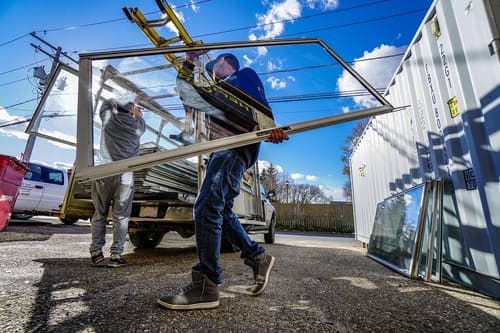
Windows And Doors Installation
Most windows and doors installation calls I take are really one job with two halves: five or six openings on a triple-decker, plus a back entry door that's been sticking since the humidity rolled in. Doing both means you're not lining up two sets of window installation contractors and hoping the calendars line up. Doors are fussier.
Hang one in an opening that's out of plumb by a sixteenth and it drags on the latch side or swings itself open, and no amount of hinge shimming saves a soft sill underneath. So we pull the casing, look at the framing, set a sill pan, then shim, flash and foam with low-expansion foam before trim goes back. Number of openings, access, and whatever rot we find move your window installation cost more than the unit itself.
Doors are half of what people book Worcester Window Replacement for.
Window Screen Installation
Window screen installation is the piece nobody thinks about until the first warm night with the sashes up and something is circling the lamp. I measure to the screen channel, not the sash opening, because a screen cut to the glass size bows in the track and spits its spline out the first gusty afternoon. Frames are roll-formed aluminum, fiberglass mesh on most houses, tighter pet-resistant mesh if your dog treats a screen like a doorway.
Anything wide gets a center bar so the mesh doesn't belly out by midsummer.
What moves the cost is the number of openings, the mesh you pick, and whether your old frames are straight enough to re-screen instead of replace.
Plenty of window installation contractors hand over whatever shipped in the box. Every screen I fit gets matched and labeled to its own opening.
Vinyl Window Installation
Vinyl window installation is most of what we do in this city, and most of it is insert work: sashes, stops and balances come out, the existing frame stays put, and the new unit gets shimmed dead square inside it. Square is the whole job. Run the screws tight against a bowed jamb and the sash binds, the lock stops lining up, and you'll be shoving on that window every damp stretch of summer.
The gap around the frame gets low expansion foam, the kind that fills without pushing the sides in. Plenty of window installation contractors pack it with fiberglass batt and call it insulated. Air walks straight through that.
What moves the price on a vinyl job is opening size, how many you're doing at once, whether the sill under the old unit is soft, and whether the exterior needs capping in aluminum coil.
Window Well Installation
Window well installation is the part of a basement job most window installation companies would rather leave off the sheet, because it means digging. We cut the grade back from the opening, set a galvanized steel or molded polyethylene well tight against the foundation, anchor it into the block or poured wall, and backfill with three-quarter crushed stone instead of the dirt that came out of the hole. The stone is the whole point.
Pack a well with loam and the first real Worcester downpour turns it into a bathtub, which you find out about when the basement carpet starts to smell. Depth, whether a machine can reach that side of the house or we're working with shovels, and whether the base gets tied into a drain line all move the cost. A clear cover on top keeps out leaves, ice and the neighborhood cats.
Basement Window Well Installation
A basement window well installation is mostly a digging job, and the digging is where it gets botched. We take the hole down below the sill line, put in a foot or so of three-quarter crushed stone so water has somewhere to drain, then set the galvanized liner and anchor it into the foundation with sleeve anchors rather than a couple of masonry nails and good intentions.
Backfill gets graded away from the wall so runoff isn't sitting against the block. Depth, access, and the ledge under half of this city are what stretch the day out, and hand-digging beside a finished patio takes a lot longer than open lawn. A clear polycarbonate cover keeps the leaves out, and leaves are the real problem: pack the well with oak litter and the next hard rain backs up over the sill and rots the frame.
If a new window installation is going in the same opening, the well goes in first.
Casement Window Installation
Casement window installation is what most people want over a kitchen sink, because a crank beats reaching across a wet counter to shove a sash up. The whole unit swings out on a hinge arm, so the hardware is doing real work.
Order a sash too wide for the operator and it sags inside a couple of seasons, drags on the frame, and quits latching at the top corner, so you're feeling air on a gusty day with the handle cranked down tight.
I match the operator and hinge to the sash weight, check the crank clears your backsplash and blinds, and shim the frame dead square before a single screw goes in. Number of openings, sash size, and whether the sill under the old unit is soft are what move a casement job up or down.
Glass Block Window Installation
Glass block window installation is the fix for a basement or bath opening where you want daylight coming in and nothing coming in behind it. We set the block in mortar, course by course, with panel anchors into the jambs and an expansion strip at the head so the wall can shift without splitting the joints. Skip the anchors and the panel bows out of plane, the mortar hairlines, and water starts tracking the seam.
If you still want air down there, we build in a hopper vent or a dryer port while the panel is going together. The joints get tooled and then left alone for a day to cure. Opening size, panel count, whether an old steel sash has to be cut out of a Green Island foundation, and how tight the access is all change the cost.
New Construction Window Installation
New construction window installation is the job where we're setting units into a bare rough opening, nail fin and all, before any siding goes on: additions, dormers, gut rehabs, a house going up off a new deck. Sequence is everything. Sill pan first, then the unit shimmed plumb and square so the sash locks with one finger, then flashing tape up the jambs and across the head, lapped so water sheds out over the housewrap instead of sneaking behind it.
Plenty of window installation companies will set the unit and leave the flashing to whoever shows up next. Do it in the wrong order and the wall looks perfect for three or four years, then the header goes soft and nobody thinks to blame the window. Openings the framer left out of square, staging for second-story gables, and how many units you're setting are what move the schedule.
Storm Window Installation
Storm window installation is what I push for when the original wood sash is still solid and you'd rather keep it than rip it out. Plenty of window installation companies only quote a full tear-out, because it's the bigger ticket. We measure every opening instead, and on a house that's settled a hundred years, no two are square, so panels get ordered to the opening rather than shoved into it.
The weep holes along the bottom are what gets skipped. I caulk the sides and the head and leave the sill alone. Seal all four edges and the moisture that sneaks past has nowhere to drain, so in two seasons you've got a punky sill and paint lifting off the sash you were trying to protect.
Count of openings, odd sizes, third-floor ladder work and low-e glass all move the quote.
Retrofit Window Installation
Retrofit window installation means the new unit drops into the frame you already have, so your siding, exterior trim and interior plaster stay right where they are. We pull the old sash and the stops, then probe the sill and jambs with a screwdriver. If it sinks into soft wood, retrofit is off the table and you want full-frame work instead.
If the frame is sound, we shim it plumb, fasten through the jambs, foam it lightly and seal the exterior. Overpack that foam and the jambs squeeze in just enough that the lock won't catch, which is the repair we get called out for most after somebody else's new window installation. The trade-off: you give up roughly an inch of glass per side, since the new frame sits inside the old.
Opening count, frame condition and second-floor access decide where a vinyl window installation lands.
What the job involves
A window installation starts with the part nobody sees: pulling the interior stops and trim, getting the old sash out, then putting a knife into the sill and lower jambs to find out how much of that wood is still wood. Painted-over rot is common on older houses off Grove Street, and it gets repaired before a new unit touches the opening.
Then the window goes in level, plumb and square, shimmed at the corners and behind the lock rather than packed tight in the middle. That middle bow is why a sash binds and a lock won't line up two winters later. I use a low-pressure foam in the gap, set a drip cap over the head so water isn't running behind the siding, and leave the bottom weeps open.
A new window installation on a ten-opening house is a day, two if the outside needs capping. Access and hidden rot are what push the cost.
What it costs
What it costs depends on a handful of things we can size up in ten minutes at your house. Openings first, how many and how big. Then whether it's a retrofit window installation into a sound existing frame or a full tear-out back to the rough opening, which takes longer and often turns up a rotted sill nobody knew was there. Glass drives it too: double or triple pane, laminated if you want the road quieter.
Casement window installation costs more than a straight double hung, mostly hardware. Older houses here need lead-safe setup, containment and HEPA cleanup, and that is time on the clock. Upper floors need staging.
Give us a ring on (508) 406-9528 with a count and rough sizes and we can put a real window installation cost together. We would sooner open a sill and look than guess at a full-frame number and revise it on day one.
When window installation is the wrong fix
Sometimes window installation is the wrong fix, and I'd rather tell you that in your living room than after the trailer's loaded. A broken sash cord, a balance that's given up, a lock that won't throw: that's window repair, and it's a fraction of the work. One fogged pane in a wall of picture windows means the seal let go, and the glass unit can be swapped without disturbing the frame or the trim.
If your old wood sash are still solid and you're just chasing a draft, storm windows on the outside are the honest answer; vinyl windows belong in a rotted opening, not a good one. And if your basement windows sit at the bottom of a well that fills every time it rains hard, the grading and the well come first. New glass in a wet hole is just a clearer view of the same problem.
Why choose us for this
You have a few openings that leak, and what you want is to have the window installation done once, properly, and not think about those windows again for years. Fair enough. The thing that sinks these jobs is rarely the glass. It is the number that grows after somebody finally measures, or a crew that pulls your sash out on Tuesday and turns up somewhere else on Wednesday with your wall still open.
The lowest bid on your street probably will not be mine. I do not close up a new window installation with fiberglass scraps jammed around the frame and casing nailed over the top, because that is the draft you feel the next cold snap, and you cannot see it to complain about it.
An estimate costs you nothing and puts you under no obligation to book.
Frequently asked questions
Will you wreck my plaster and siding getting the old windows out?
No. On a window installation we pull the sash and jamb liners first and save the interior casing wherever it's sound, so the opening is only open to the air for a few minutes before the new unit is set, shimmed and checked for square. Plaster keys let go on old houses, so we score the paint line before anything moves.
Can this window be fixed instead of replaced?
Often, yes. A sash that won't stay up usually needs a balance or a cord, not a whole new unit. Fogged glass between the panes means the seal failed, and on plenty of frames we can swap just the insulated glass. Rot in the sill and a frame racked out of square are where vinyl window installation actually earns its keep.
What makes one opening cost more than the one next to it?
Size, access, and what we find behind the trim. Third floor openings need staging. A custom size runs above a stock one, and older Worcester houses with lead paint need the work area contained, which adds hours.
Contact Worcester Window Replacement now
Worcester window replacement starts with a tape measure at your house, and the person holding it is us. Every opening gets measured at the top, middle and bottom, because a century-old triple-decker on one of these hill streets almost never has two windows the same width, and a unit ordered a half inch fat comes off the truck as scrap.
The number is (508) 406-9528, weekday hours nine to five, and if a pane is out and you have plywood over the hole, we will come out on a Saturday for that.
What shifts the size of the job is how many openings there are, whether the sash drops into sound existing frames as a retrofit window installation or the whole frame has to come out, second and third floor access, and rot in the sills. If a back door belongs on the same list, mention it, because windows and doors installation in one visit means one setup instead of two.