Cracked clapboards, paint letting go in sheets, and a soft spot you can push a thumb into.
Worcester siding earns its money. Sun cooking the west wall all afternoon, ice working into the seams, and a triple-decker that was never square to begin with.
We hang cedar shake siding, board and batten siding, LP Smart siding, metal siding and aluminum siding, and we tear off T111 siding that has gone spongy along the bottom edge. What I will not do is put new panels over sheathing that is still damp or crumbling. That wall looks sharp from the sidewalk and quietly turns to oatmeal behind the new stuff, usually right where a gutter has been dumping for years.
Below is what the work involves, what changes the cost, when new siding is the wrong fix, and the questions people ask first. Ring (508) 406-9528 and we will walk the house together.
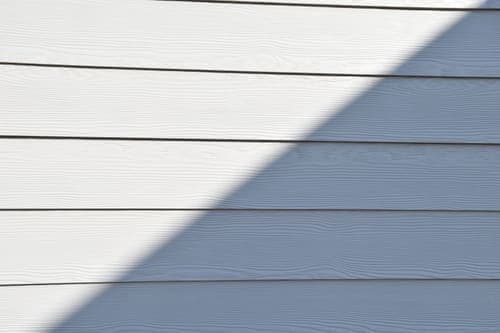
Fiber Siding
Fiber siding, the cement board kind, is the heaviest thing we hang on a wall and the least forgiving of a rushed install. Each plank wants two people, gets cut with shears or a saw running dust collection, and is blind nailed into framing so the heads tuck under the course above. Overdrive those nails and the board cracks within a year.
Butt joints need flashing behind them, not just a bead of caulk, and every cut end gets primed before it goes up, or the ends drink water and swell. It's stiffer and heavier than aluminum siding, so plan on a slower wall.
Siding like this is a good share of the work we do at Worcester Window Replacement, so we flash the window openings and the wall as one job while everything is open.
Board And Batten Siding
Board and batten siding is the vertical look, wide panels with narrow strips covering every seam, and it flatters gable ends, dormers and the front of a plain colonial better than anything else we hang. We fur the wall out first, block behind the horizontal joints, and nail each batten through the middle of the panel instead of pinning both edges. Pin both edges and the panel splits itself the first humid stretch in July.
We also snap lines for the spacing, because battens set by eye give you a wall that waves at you when the low afternoon sun rakes across it.
Wall height drives the labor here, along with how many windows and gables need trim returns, how tight you want the battens, and whether the panels are engineered wood siding, fiber siding or metal.
Engineered Wood Siding
Engineered wood siding is wood strands pressed with resin and wax, primed at the factory, and it hangs like a lap board with a straighter face than cedar ever gives you. We cut it with a fine tooth blade and prime every cut end before it touches the wall, because a raw end drinks water and swells into a mushroom by the second wet spring.
It stays clear of grade, clear of the roof shingles, fastened into studs with the nails set flush and never punched through the face. Done carelessly, the bottom course puffs up and the paint splits right along the butt joints.
It comes in panels as well as laps, so the look is yours to pick.
On a triple decker, staging is half the work. Wall area, corner count, window trim and stripping the old layer all push the cost around.
Metal Siding
Metal siding is what people ask me about after a hailstorm or a season of woodpeckers, and it earns its keep: steel panels with a baked-on fluoropolymer finish will not rot, feed insects, or need repainting every few years. Done badly it oil cans, that wavy shimmer down a sunlit wall, and that comes from over-tightened fasteners or a stud line nobody bothered to straighten.
So we shim the wall flat, leave every panel room to move with the temperature, and prime the cut edges, because bare steel at a cut rusts and a rust streak under a window is the first thing anyone notices.
A ladder foot or a chunk of plow ice dents aluminum siding sooner than steel, which is why I steer most people toward the heavier panel. Figure most of a week on an average house. Gauge, panel profile, trim detail and whether the old cladding comes off first are what swing the number.
Wood Siding
Real wood siding still earns its keep on plenty of houses here, especially the older three-deckers where clapboard is what the corner boards and window casings were built around. We hang cedar bevel or clear pine, and every board gets primed on all six faces, cut ends included, before it goes on the wall.
Skip that step and the back of the board drinks moisture all winter, the boards cup, and your paint peels off in sheets by the second wet spring. Fasteners matter just as much: stainless or hot-dipped galvanized only, because plain steel nails bleed rust streaks down a cedar wall like a bad mascara day.
Price rides on the grade of the board, clear vertical grain against knotty, how much staging a third story needs, and whether we paint on site or hang prefinished stock.
T111 Siding
T111 siding is the grooved plywood panel hiding on half the garages and split-levels up around Greendale, and when it fails, it fails from the bottom edge up. Water wicks into the raw ply where the panel sits too close to grade, the layers pull apart, and a screwdriver sinks into wet fiber like it's a wet sponge cake.
First thing I look at is the Z-flashing at the horizontal seams, because when that got skipped, everything below it is usually cooked.
Single panels can be swapped, though matching paint on a wall that's been fading since the Rock of Ages was young is its own project. Plenty of people use the moment to move to lap or lp smart siding, or to board and batten siding if they like the vertical lines already.
Rotted sheathing, staging height and the trim count around openings all push the number up.
Aluminum Siding
Aluminum siding is still wrapped around a good number of Worcester three-deckers, and most of the calls I get about it start with the chalk. Run your hand down a sunny south wall and your palm comes away gray. Once that baked-on finish oxidizes, paint is a gamble and new panels are usually the better money.
Dents are the other complaint. Metal siding takes a hail hit or a stray ball and keeps the crease forever, and matching a discontinued profile turns into a scavenger hunt.
When we hang replacement panels we leave them loose on the nail hem so the metal can move, trim the window openings properly, and lap the seams away from the street. Drive the nails tight and you get oil-canning the first hot week in July.
Squares, corners, gables and staging height move the cost.
Cedar Shake Siding
Cedar shake siding is the one people fall in love with and then underestimate. It goes up by hand, course by course, with the butts staggered so the wall doesn't look like a machine spat it out, and it takes considerably longer than hanging panels, especially on a three-decker where half the day is staging. We fur the wall out over the housewrap first so the backs of the shakes can dry, and we set them with stainless fasteners.
Galvanized nails react with the tannins in cedar and you get black streaks running down a brand new wall inside a couple of years. We also prime or stain all six faces before they go up, cut ends included, because a raw butt edge drinks water. Wall area, corner count, staging height and whether you want cedar shake siding stained or left to weather silver decide how big the job gets.
What the job involves
Siding work starts with whatever is hiding under the old stuff, so we pull a panel or two before I price anything. On plenty of Worcester three-deckers the sheathing on the weather wall has been soft for years and nobody upstairs ever knew.
We strip back to the boards, cut out the rot, then wrap the walls, tape the seams, flash the window heads and set a kickout where a roof meets a wall, because that one small piece of metal is what keeps water out of the corner. Starter strip, corners, then the panels, hung loose enough to move. Nail them home tight and they buckle in the first real August heat. A single-family typically runs about a week.
Stories, staging on a steep lot, and how much rot turns up are what push the price around.
What it costs
What it costs comes down to four things I can size up standing on your lawn. Square footage, obviously. Then height and access, because a three-decker with a four-foot gap to the neighbor needs staging rather than ladders, and that staging goes up before a single panel does. Then the count of corners, windows and doors, since trim and flashing around openings eats more hours than the long flat runs ever will.
Last, what turns up when the old layer comes off. Pull tired T111 siding off a wall that has been wicking at the seams and you find soft sheathing, which gets replaced, not buried under new work. Going over the top of existing siding is cheaper and sometimes the wrong call. Dial (508) 406-9528 and we will walk the whole house with a tape. Nobody prices rotten sheathing from the curb.
When siding is the wrong fix
Sometimes siding is the wrong fix, and saying so costs me the job. If the cold you feel is at the glass and not the wall, new panels change nothing you care about. That is window replacement in Worcester, or a straight swap to double hung windows in the rooms you actually sit in. A freezing corner at the front of the house is usually the bay windows themselves, not the wall around them.
Drafts at the entry are a tired threshold and flattened weatherstrip, so exterior doors, or storm doors on a porch that eats the wind, buy you more comfort than a whole elevation of engineered wood siding.
And if the sheathing is soft or the sill is punky, plenty of siding companies will wrap right over it. The water stays in there, and a few years on the nails start backing out of rotten framing. Repair that first.
Why choose us for this
You've got siding that's gone soft in one corner, two quotes that don't agree, and no interest in living through this twice. Fair enough.
Three things swing the price on a siding for house job here: the square footage and how many stories, whether the lot is tight enough to need staging, and what we find once the old panels come off. Soft sheathing gets cut out and replaced.
I don't screw new material, whether it's an lp smart siding panel or anything else, over punky board and hope for the best, because that telegraphs as waves in the wall by the second summer and you'll see it every time you pull in.
So I put possible sheathing repair on the estimate at the start instead of springing it as a change order. Plenty of siding companies leave it off to look better on the phone.
The estimate is free, and a no costs you nothing.
Frequently asked questions
Can you install new siding over what's already on my house?
No. I strip it down to the sheathing, because covering the old stuff means nobody sees the soft spot under the kitchen window until it turns structural. With the walls bare I can cut out punky sheathing, replace it, then housewrap and tape the seams so water has somewhere to go.
How long is my house open to the weather?
We only strip what we can dry in that same day, so you're not sitting under a tarp hoping the rain holds off. A typical three-bedroom runs a week to two weeks, longer if there's rot at the sills or staging has to go up on a tall gable.
What changes the price?
Square footage first, then the fussy parts: outside corners, window and door trim, gable work, and whatever we find once the wall is open. Material choice swings it, and so does access on a tight lot.
Contact Worcester Window Replacement now
Contact me now, while you are still at the stage of pressing a thumb into a soft spot and hoping it holds. Call (508) 406-9528, weekdays, nine to five, and if you catch the phone outside those hours, leave a message and the call comes back from me rather than a call center. What I ask first is how many stories, what is on the walls now, and whether water has already found the sheathing.
Size, access and hidden rot are what swing the cost of siding for house work, and plenty of the three-deckers here have side yards so tight that staging becomes part of the job. Some siding companies quote from the curb without ever pulling a corner board. I would rather stand in your yard, count the openings, and tell you whether fiber siding is even the right call.